
Trail Photography Tips (From Someone Who Takes Too Many Pictures of Moss)
I have approximately 47,000 photos on my phone and I’d estimate 40,000 of them are from hiking. Moss, ferns, mushrooms, the same view of the Olympics from slightly different angles, water droplets on leaves, more moss. My wife has given up asking to see my hiking photos because she knows it’s going to be twenty minutes of things that all look similar.
But here’s the thing: taking photos has made me a better hiker. Not because I’m capturing anything artistic, but because the act of looking for photos makes me look more closely at everything. I notice things I would have walked past. I slow down. I pay attention.
So this isn’t “how to take professional nature photos.” This is “how taking photos can enhance your hiking experience and maybe result in some pictures you actually like.”
The PNW Light Thing
People complain about Pacific Northwest weather but it’s actually fantastic for photography. The constant overcast skies create soft, even light with no harsh shadows. Colors stay saturated. You can shoot in the middle of the day without everything looking blown out.
The exception is sunny days, which do happen. When the sun comes out, you get high contrast that can be hard to work with—bright spots that are too bright, shadows that are too dark. Early morning and late afternoon are your friends on sunny days. Midday direct sun in the forest creates a spotted mess.
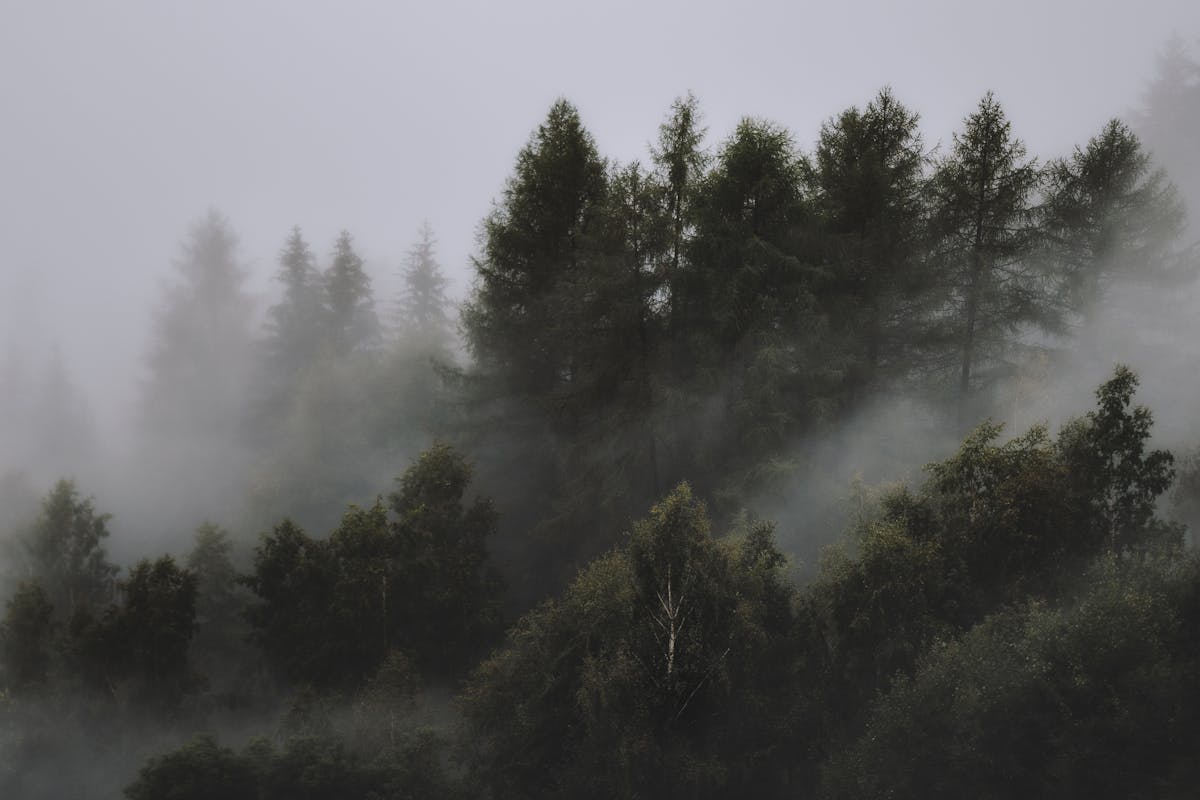
I actually prefer slightly overcast days for forest photography. The greens are greener. The mood is better. The misty morning aesthetic is real and worth seeking out.
Phone vs. Camera
I went through a phase of carrying my DSLR on every hike. The photos were better, technically speaking. But the hassle wasn’t worth it—the weight, the worry about damage, the constant lens changes. Now I use my phone for 90% of trail photography.
Modern phone cameras are genuinely good. The computational photography stuff they do (HDR, portrait mode, night mode) handles a lot of the technical challenges that used to require expensive equipment and skill. Unless you’re printing big or selling your work, a phone is probably fine.
That said, phones struggle in certain conditions. Very low light without direct subject (like deep forest on dark days). Extreme contrast. Trying to capture distant details. If these things matter to you, a camera might be worth it. For me, the phone is enough.
Composition Stuff
I’m not going to pretend I know a lot about composition. But here are the things I’ve figured out through trial and error:
Get low. So many of my favorite trail photos are from crouching down and shooting at ground level. Mushrooms look better from their own height. Trails look more dramatic when you’re close to the ground. This feels weird at first but the results are worth it.
Look for leading lines. Trails, roots, fallen logs, creeks—anything that draws the eye through the frame. Our trails are full of these once you start looking.
Find the light. Even on overcast days, there are spots where light is doing something interesting—rays through canopy gaps, glow on a particular fern, reflection off wet bark. Train yourself to notice where the light is and position yourself to use it.
Include scale. A photo of a giant tree just looks like a tree. A photo of a person standing at the base of a giant tree shows how giant it is. Include yourself, your hiking partner, your backpack—something that gives viewers a sense of size.
Don’t center everything. The rule of thirds is basic but it works. Put your subject off to one side and the photo often looks more interesting.

Subjects That Work in Kitsap
Our forests are full of things to photograph. Here’s what I find myself shooting most:
Moss. There’s so much moss and it’s so green and I can’t stop photographing it. Different species have different textures. Wet moss versus dry moss looks completely different. I have a problem.
Mushrooms. Fall especially, but they pop up year-round. Get close, get low, shoot them at their level. The variety is incredible once you start looking.
Trees. Both the massive ones that make you feel small and the interesting dead ones with character. Old-growth forests are particularly photogenic.
Water. Creeks, puddles, rain on leaves, the way water moves through forest landscapes. If you have a camera with manual settings, try long exposures on moving water—that silky effect is a cliché but I love it anyway.
Views, obviously. When you get to a viewpoint, take the postcard shot, but also look for more interesting angles. The standard view gets photographed a thousand times; can you find something different?
Weather. Rain, fog, mist—these are features, not bugs. Some of my favorite photos are from objectively terrible weather days when the forest was dripping and moody.
The Attention Thing
The real benefit of trail photography isn’t the photos themselves. It’s what happens to your attention when you’re looking for photos.
When I hike without thinking about photography, I see the trail. The general forest. Big obvious features. When I hike with photography in mind, I see individual mushrooms growing on a log, the way lichen patterns on bark, specific light falling through specific gaps. The same trail becomes infinitely more detailed.
This connects to what I wrote about in trails that surprised me—sometimes it’s not about finding new trails, it’s about seeing familiar trails with fresh eyes. The camera (or phone) is a tool for fresh eyes.
You don’t even have to keep the photos. Sometimes I take pictures of things I know I’ll delete later, just because the act of framing the shot made me look more carefully. The photo was just an excuse to pay attention.
Practical Stuff
Protect your phone/camera from rain. I use a simple dry bag for my phone on rainy hikes. Getting water damage on the trail would ruin everything.
Clean your lens. Phone lenses especially get smudged. Wipe it before you shoot something you care about.
Take more photos than you think you need. Storage is cheap. Delete later. In the moment, just shoot.
But also put the phone away sometimes. If you’re only seeing the trail through a screen, you’re missing something. I try to do a mix—photo stops where I’m actively looking for shots, and walking periods where the phone stays in my pocket.
My Current Approach
I hike with my phone in an easily accessible pocket. When something catches my eye, I stop and shoot. Sometimes I spend ten minutes in one spot trying different angles. Sometimes I take one quick photo and move on. It depends on the light, the subject, and my mood.
I don’t edit much. Basic cropping and exposure adjustments sometimes, but mostly I share photos as they came out of the phone. This isn’t professional work; it’s memory-making and attention-training.
I never share more than a few photos from any hike. The forty similar moss shots are just for me—evidence that I was paying attention, even if only I care about the subtle differences between them.
And I still take too many pictures. But that’s okay. The looking is the point. The photos are just a side effect.
— Rob Kinsley