
Dog-Friendly Trails in Kitsap County (Honest Reviews)
I don’t have a dog. But I hike with my friend Mike and his very enthusiastic golden retriever Cooper so often that I’ve become an expert on which Kitsap trails are actually good for dogs versus which ones just technically allow them.
There’s a difference, it turns out. Some trails allow dogs on leash but have terrain that’s miserable for four legs—too steep, too rocky, too many obstacles. Other trails are genuinely dog paradise: interesting smells, good water access, appropriate difficulty, and space to actually enjoy being a dog.
This is my honest assessment of the trails Cooper and I have explored together, from the perspective of someone who’s watched a lot of dogs have either really good or really bad trail experiences.
The Dog-Hiking Basics
Before we get into specific trails, some general stuff I’ve learned from Mike and other dog-hiking friends:
Most Kitsap trails require dogs on leash. Off-leash areas exist but they’re limited. This matters for trail selection because some trails are more leash-friendly than others—wide paths versus narrow singletrack, for example.
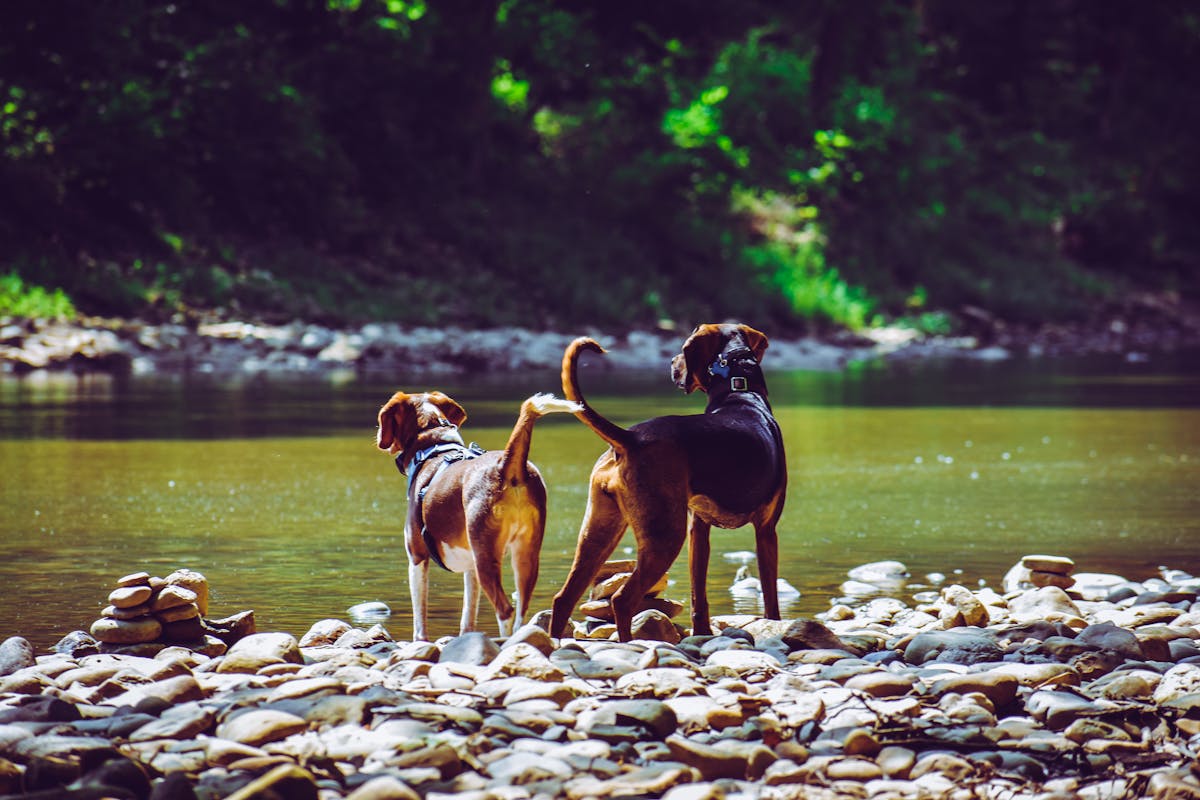
Water access matters a lot for dogs, especially in warmer months. Dogs overheat faster than humans and can’t carry their own water bottles. Trails with creeks or beach access are significantly better for dog hiking.
Trail surface affects dogs differently than humans. Rocky trails are harder on paws. Muddy trails mean a muddy car. Boardwalks can be slippery for dog claws.
Wildlife encounters are more likely with dogs because dogs notice (and often chase) things humans miss. Be prepared to manage your dog around deer, squirrels, and other creatures.
The Washington Trails Association has good info on hiking with dogs in the PNW generally.
The Best Dog Trails
Clear Creek Trail (Silverdale)
This is Cooper’s favorite and I understand why. Flat, well-maintained, creek access for cooling off, interesting smells, and wide enough that passing other trail users (including other dogs) isn’t awkward. Mike and I have done this one probably thirty times and Cooper never seems bored.
The only issue: it’s popular with other dog walkers, so you will encounter other dogs. Cooper is friendly with other dogs; not all dogs are. Know your dog.
We usually do the 2-mile section from the Ridgetop Boulevard access point. There’s parking, it’s easy to find, and the trail is good surface the whole way. I mentioned this in my after-work hikes post too—it’s great for humans, even better for dogs.
Grand Forest (Bainbridge Island)
Dogs are allowed on leash here, and the trails are excellent for them. Wide paths, interesting forest floor to sniff, not too much elevation change, and enough variety that multiple visits stay interesting.
Cooper goes into full investigation mode here—every stump, every fern, every mysterious hole needs to be thoroughly examined. A 1.5-mile trail takes us about an hour because of all the stopping to sniff. Which is fine. That’s what he’s here for.
The ferry ride to Bainbridge allows dogs on the passenger deck, which Cooper loves. He gets very excited about the seagulls.
Newberry Hill Heritage Park
Wide trails, plenty of space, not too crowded—this is a solid dog hiking destination. The equestrian trails are broad enough for easy leash management, and there are some nice open areas where dogs can move around more freely (while still on leash).
Cooper found some truly impressive sticks here. Like, entire fallen branches that he insisted on carrying. Mike had to negotiate him down to a more reasonable stick size. Dog ownership looks exhausting sometimes.
Fish Park (Poulsbo)
Good for dogs who are okay with boardwalks (some dogs hate the feeling under their paws) and who can be trusted not to jump into the wetlands. Cooper has attempted this jump several times. Mike has developed very fast reflexes.
The smells here must be incredible because Cooper acts like he’s at a buffet. Every three feet there’s something new to investigate. The short trails mean you can do multiple loops if your dog is having a good time.
Decent But Not Perfect
Green Mountain State Forest
Dogs are allowed and lots of people bring them, but the terrain is challenging. The Gold Creek Trail has significant elevation gain, rocky sections, and some scrambling spots that can be tough for dogs (and for managing a leash). Cooper did fine here but was pretty tired by the end, and Mike said managing the leash on the steep sections was annoying.
The mud factor is also intense. Cooper came back from our January Green Mountain hike so dirty that Mike had to take him to a professional groomer. The car was… not salvageable with just towels.
Good for athletic dogs with experienced handlers. Maybe not ideal for dogs who are new to hiking or owners who aren’t prepared for a workout themselves.
Port Gamble Forest Heritage Park
Dogs are allowed but the navigation issues here are even more annoying when you have a dog. Getting lost is stressful enough without also managing an impatient golden retriever who wants to know why we’ve stopped moving.
When you’re on trail and know where you’re going, it’s fine. Good forest, interesting terrain, plenty of sniffs. But download the map ahead of time and plan your route carefully.
Guillemot Cove Nature Reserve
Dogs are technically allowed but I’d call this a “mixed” recommendation. The beach at the bottom is dog heaven—water, sand, seabirds to be fascinated by. But the trail getting there and back is steep, with lots of roots and steps, and managing a leash while climbing is not fun.
Cooper loved the beach portion so much that the hike out became a battle of wills. He did not want to leave. This was very funny for me to watch and apparently very annoying for Mike.
Where Not to Bring Dogs
Some places either don’t allow dogs or allow them but really shouldn’t be your first choice:
Point No Point beach: Dogs are restricted on the beach itself during certain times of year (bird nesting season). Check before you go.
Many of the smaller Nature Conservancy preserves have dog restrictions to protect sensitive habitats. Always check the rules before assuming dogs are welcome.
Guillemot Cove during peak wildflower season: You can bring dogs but please keep them on short leash. Dogs running through trillium patches make me sad.
Practical Dog Hiking Stuff
Things I’ve learned from watching Mike do this:
Bring more water than you think. Cooper drinks a lot, especially when it’s warm. Mike carries a collapsible bowl and usually goes through a full liter just for Cooper on longer hikes.
Poop bags are non-negotiable. Nothing worse than dog poop on trails. Mike is aggressive about this and I respect it. Pack it out.
Towels in the car. Old towels, specifically, that you don’t care about ruining. Dogs get muddy and wet and will absolutely destroy your upholstery if you let them.
A dedicated “dog hiking” car if possible. Mike’s Subaru is the dog car. His wife’s car is dog-free. This seems like smart household logistics.
Check paws after hikes. Cuts, thorns, and embedded debris happen. Cooper has had several thorn incidents that required attention.
The Social Component
One thing I’ve noticed hiking with Mike and Cooper: dogs are social lubricant. Way more people stop to chat when there’s a friendly dog involved. Mike knows more people on the Clear Creek trail than I know in my entire neighborhood, purely because Cooper is very good at making friends.
This can be positive (community! connection!) or negative (you just want to hike and everyone keeps stopping you). Know your preferences and choose your trails accordingly. The more crowded trails mean more dog interactions, for better or worse.
Is It Worth It?
I don’t have a dog, so take this with whatever grain of salt makes sense. But watching Cooper on trails—the enthusiasm, the joy, the total absorption in every single smell and sound—makes me understand why people make the effort. Dogs love hiking in a way that’s infectious. It’s hard to be in a bad mood when you’re watching a golden retriever discover a new stick he loves.
The logistics are harder than hiking solo or with humans. You need more gear, more planning, more water, more towels. But the experience of sharing trails with a dog who’s having the time of their life seems pretty worth it.
If you’re thinking about getting into dog hiking, start with Clear Creek or Grand Forest. Easy trails, forgiving terrain, good for building your dog’s trail fitness and your own dog-management skills. Save Green Mountain for when you’re both in shape and know what you’re doing.
And if you see Mike and Cooper on the trail—Cooper’s the one carrying an absurdly large stick and looking very proud of himself—say hi. He’s very friendly. The dog, I mean. Mike’s okay too.
— Rob Kinsley